PARİS 2024Paralimpik Oyunlar

GÜN
SAAT
DAKİKA
SANİYE
| Genel
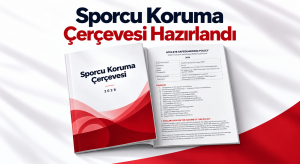
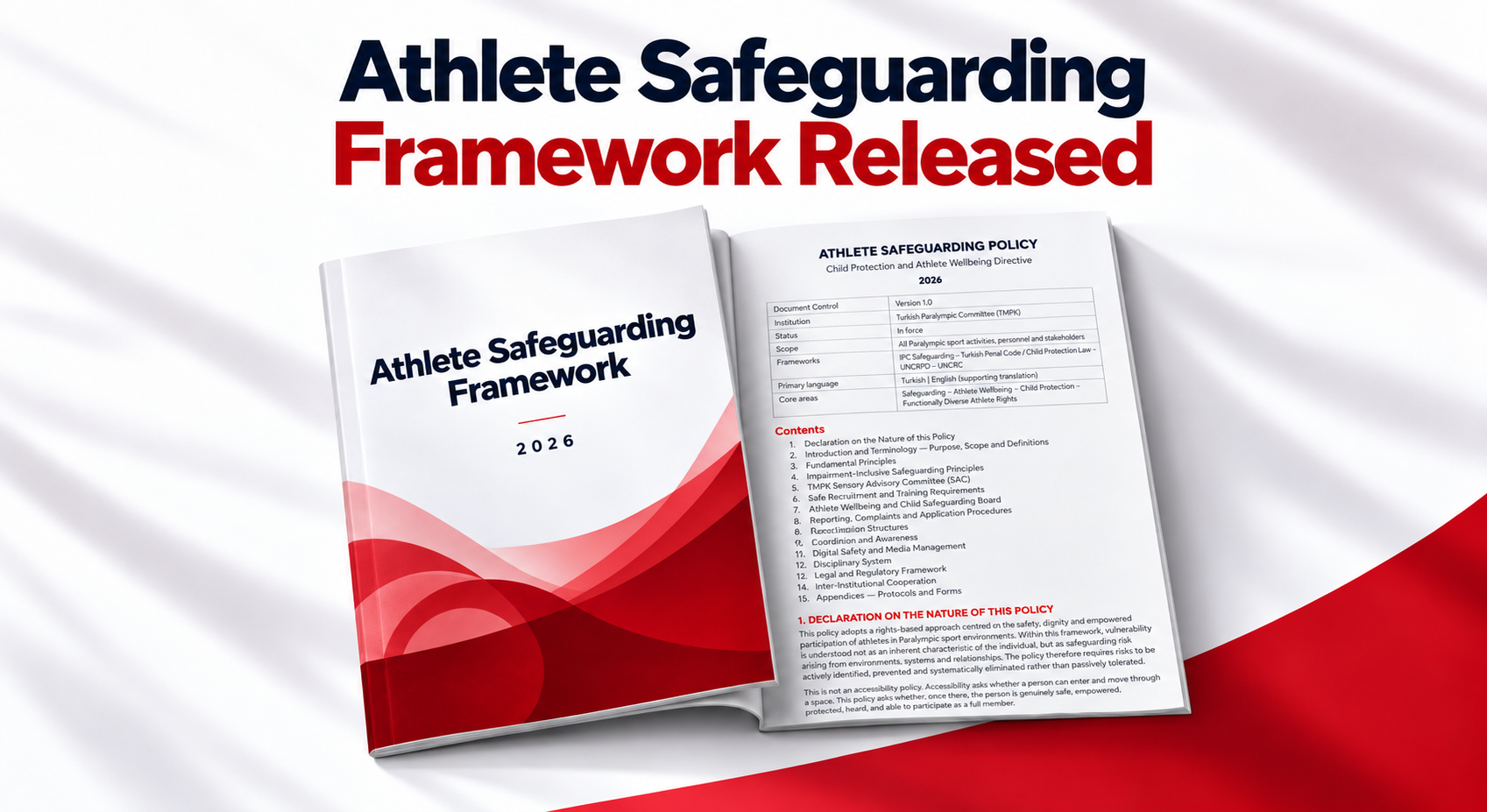
Türkiye Paralympic Committee Athlete Safeguarding Framework Developed
The Athlete Safeguarding Framework, prepared by the Turkish National Paralympic Committee’s Athlete Safeguarding Board, presents a holistic approach to athlete safety and well-being. It addresses these issues not merely through procedural measures but based on human rights, dignity, accessibility, meaningful participation, mental health, prevention, and institutional responsibility.
The Turkish National Paralympic Committee (TNPC) has taken a significant new step in its efforts to make the Paralympic sports environment safer, more inclusive, and more accessible.
Prepared by the TNPC Athlete Safeguarding Board, the Athlete Safeguarding Framework treats safeguarding not merely as a mechanism activated when problems arise, but as an integral part of the institutions’ decision-making and operational culture.
At the core of the framework lies a clear and powerful principle: athletes are not simply individuals in need of protection; they are rights-holders, participants, and active contributors to shaping the sporting environments where they train, compete, and live.
From safeguarding to empowerment
The new framework evaluates the athlete safeguarding approach through the lenses of human rights, human dignity, meaningful participation, accessibility, mental health, preventive mechanisms, accountability, and institutional responsibility.
This approach aims to ensure that athletes are not merely protected by existing systems but also have a voice in decision-making processes regarding their own safety and well-being.
The framework also envisions strengthening the role of lived experience in decision-making processes through an Athlete Advisory Committee. The goal is to ensure that athletes’ views are directly taken into account regarding matters affecting their safety and well-being—particularly during ongoing events and in operational processes where needs can change rapidly. A proactive sports culture
The TMPK Athlete Safeguarding Framework is based on the premise that effective safeguarding is not merely about the response provided after an incident has occurred.
Accordingly, it emphasizes that systems must ask themselves the following questions before issues even arise:
Has an environment been created where athletes and other stakeholders feel comfortable speaking up? Are they truly heard when they voice their opinions? Can concerns be shared without fear of reprisal? Are existing systems and mechanisms accessible to everyone? And most importantly, are institutions prepared to change when a practice is shown not to be working?
This approach prioritizes fostering a culture of trust, respect, dignity, and shared responsibility over a control-based mindset rooted in fear.
Safeguarding as part of organizational culture
The TMPK emphasizes that athlete safeguarding should not be viewed merely as a technical function assigned to specific individuals or units.
The framework aims to evolve the safeguarding approach from compliance to culture, from merely protecting people to empowering them, and from policies that react to harm to systems designed to prevent harm before it occurs.
In this context, athlete safeguarding is defined as a shared organizational responsibility that permeates all decisions and practices within an organization.
A toolkit to facilitate implementation
The Athlete Safeguarding Framework goes beyond the level of principles and policies. It is supported by a toolkit comprising forms and practical tools designed to facilitate implementation across various organizations and structures.
The aim is to transform the safeguarding approach from a complex system that only experts can manage into one that can be easily integrated into daily processes by on-the-ground managers, organizational teams, and relevant stakeholders. The Turkish National Paralympic Committee is making the English version of the framework prepared by the Athlete Safeguarding Committee available for use and review by the international Paralympic community.
The TNPC believes that a safe sporting environment is achieved not merely through rules and procedures, but through a strong culture where athletes’ voices are heard, their rights are protected, their needs are considered, and institutions are ready to change when necessary.
For safeguarding is not just a function; it is an organizational responsibility.
TMPK Athlete Safeguarding Policy – Gold Copy 2026
The Turkish Paralympic Committee is pleased to present the updated TMPK Athlete Safeguarding Policy – Gold Copy 2026, building on the previously published version and further strengthening our approach to athlete safeguarding, wellbeing and governance.
The updated policy adopts a preventive, athlete-centred and rights-based approach, recognising that safeguarding is not limited to responding to incidents. It is about creating systems, cultures and environments in which athletes are respected, heard, protected and able to participate safely and with dignity.
What distinguishes the updated framework?
• Living Governance – safeguarding is treated as an evolving system informed by athlete voice, lived experience, emerging risks and continuous review.
• Athlete Voice and Participation – athletes are not simply recipients of protection; their perspectives and experiences contribute to safeguarding governance and decision-making.
• Functionally Diverse–Inclusive Safeguarding – the framework recognises different physical, sensory, intellectual and functional needs and incorporates accessibility into safeguarding practice.
• Child and Adolescent Safeguarding – stronger protections for children and young athletes, including attention to consent, participation, communication, privacy and best interests.
• Mental Health and Wellbeing – safeguarding extends beyond physical protection to psychological safety, crisis response, dignity and athlete welfare.
• Digital Safeguarding – strengthened protections addressing online communication, social media, grooming, privacy and digital boundaries.
• Safe Travel and Accommodation – detailed safeguards covering transport, accommodation, overnight stays, chaperoning and away competitions.
• Medical Readiness and Athlete Protection – safeguarding considerations integrated into medical preparedness, emergency arrangements and individual athlete needs.
• Clear Reporting, Investigation and Accountability – defined procedures for reporting concerns, risk assessment, protective measures, investigation, sanctions and appeals. Clear steps on prevention of retaliation and restorative justice
The philosophy
The policy is founded on a simple principle:
Safeguarding should not begin when harm occurs. It should begin with the way an organisation designs its culture, governance and systems.
The 2026 Gold Copy therefore seeks to move safeguarding from a primarily reactive model toward a preventive, participatory and continuously evolving framework, placing the dignity, rights, safety, wellbeing and voice of every athlete at its centre.
This is safeguarding as living governance: a system that listens, learns, adapts and continuously works to make sport safer for everyone.
KATEGORİLER
DİĞER HABERLER
-

Türkiye Milli Paralimpik Komitesi Sporcu Koruma Çerçevesi Hazırlandı
-
Kocaeli 2026’da Tarihi Final: Türkiye Avrupa Altıncısı
-
Kocaeli 2026’da Beşinci Gün: Dünya Rekorları ve Büyük Mücadeleler
-
Kocaeli 2026’da Dördüncü Gün: Defne Kurt’tan Üçte Üç
-
Kocaeli 2026’da Üçüncü Gün: Sevilay Öztürk’ten Bir Altın Daha, Türkiye Tarihi Eşiği Aştı
-
Tüm Haberler